

DMG Mori CTX
DMG Mori CMX 800 V Review: The iPhone of CNC Machines
This is my honest DMG Mori CMX 800 V review, written after getting back behind the control and remembering all the little rituals this machine expects you to know.
This machine is gorgeous.
The first time I saw one was at the NEC quite a few years ago. I remember looking at it and thinking:
“This thing is beautiful.”
To me, it brought CNC machines properly into the 21st century.
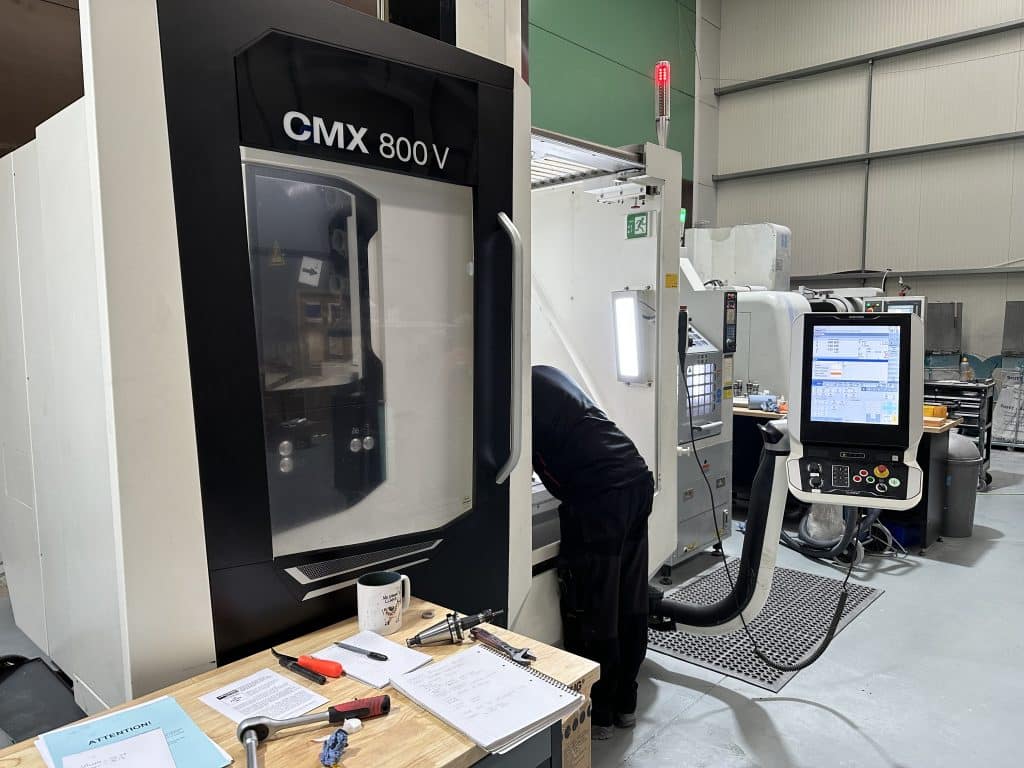
This is definitely the iPhone of the CNC machine world.
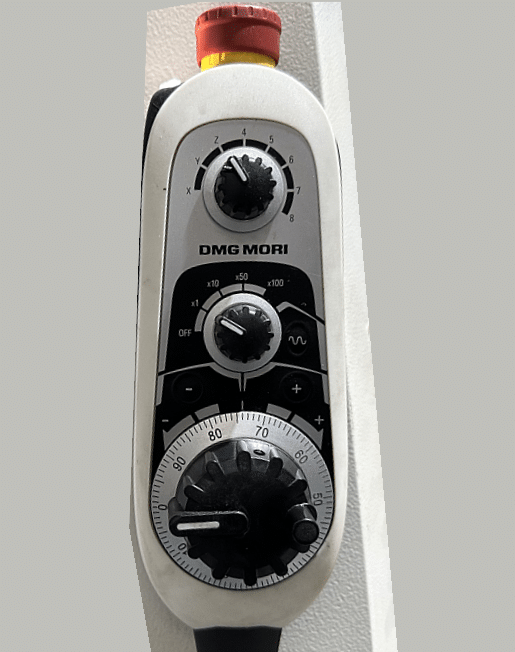
Even the handwheel is sexy. Yes, I know.
I’ve reached the age where I’m describing a CNC handwheel as sexy. Things could be worse.
When You Know, You Know
Something that annoys me about modern CNC machines is the rigorous protocol you sometimes have to follow to do the simplest bloody thing.
This machine definitely has a few of those little rituals.
I think I now understand the expression:
“When you know, you know.”
Because until you know, you haven’t got a fucking clue.
I was genuinely excited about working with this beast.
That excitement lasted right up until I couldn’t get the handwheel to work.
Fortunately, I always allow plenty of time to get back into using a machine I haven’t seen for a while.
Partly because machines have their own quirks.
Partly because controls change.
And partly because my memory now works like an old Windows computer with twelve toolbars installed.
A Message to DMG Mori
One day, I will rip my own bollocks off in temper and it will be your fault.
Yes, you know what I mean.
Some clever bloke decided the handwheel should stop working if the feed-rate potentiometer is set to zero.
One click up and it works perfectly. Wind it back to zero and no. The handwheel is having none of it.
The machine knows I am using the handwheel. I know I am using the handwheel. The handwheel knows it is a handwheel.
But the feed-rate knob is on zero, so apparently nobody is going anywhere. I can only imagine a meeting where somebody said:
“What this machine really needs is a completely silent way of making experienced engineers feel like absolute beginners.”
And everybody agreed. It has caught me out several times.
That is why grown men end up walking around workshops talking to themselves. It’s not drink. It’s not drugs.
It’s not the pressure of modern life. No. It’s fuckin handwheels.
Moan over. Probably.
It Oozes Quality
Once you start using this DMG Mori vertical machining centre, it oozes quality.
Everything feels substantial.
Closing the door feels like closing a bank vault or the door of a 200 grand Bentley..
There is no rattling, flexing or wondering whether the handle is about to come off in your hand.
And when a part flies out at you, at least you know it’s the tool that will get it and not you.
That is reassuring.
Not as reassuring as clamping the part properly in the first place, obviously.
But still reassuring.
The working area is open and accessible. You can get near the job without leaning into the machine like you are trying to retrieve a pound coin from the bottom of a drain.
You can see what you are doing.
You can get a clock in there without dislocating a shoulder.
These things rarely appear in glossy brochures, but good access makes a massive difference when you are setting jobs every day.
The Siemens CNC Control
Once you get used to it, the Siemens CNC control is brilliant.
It gives you plenty of information, and most of it is where you expect it to be.
Eventually.
The first few hours are spent pressing buttons and quietly asking:
“Why the fuck have you put that there?”
Then suddenly it clicks.
At first, Siemens controls can feel as though they were designed by twenty extremely clever people who were not allowed to speak to each other.
After a while, you begin to understand the logic.
Then you use another control for six months, come back to Siemens and have to learn the secret handshake all over again. There is so much stuff on these controls it can do anything just ask. Being totally honest Siemens is my favourite control. There you are you heard it hear.
DMG Mori Tool Management
I don’t know how much of the tool system comes from Siemens and how much comes from Mori, but I love the logic behind it.
All your active tools are listed on the control.
When you no longer need one, you unload it.
You don’t delete it.
The tool drops out of the active list, but all its information remains:
- Length
- Diameter
- Tool type
- Any other data you have entered
When you need it again, select it, click load and the machine suggests a magazine pocket.
This makes much more sense than deleting a tool completely and entering everything again six weeks later.
Obviously, it only feels simple once somebody has shown you.
Before that, you can spend forty minutes staring at the screen while pretending you are checking something important.
We’ve all done it.
Loading Tools
The Mori part, I think, is the way you physically load the tool.
You go around to the tool changer, where the door is conveniently open and the correct station is ready for you.
The machine tells you where the tool goes. You put it there. Job done.
Well, job done once you remember which button confirms it.
Everything on a modern CNC machine requires confirmation.
Sometimes I think it would ask “Are you sure?” before allowing me to go for a piss.
You can also list a 3D taster, probe or DTI as a tool. That makes perfect sense.
It lives in a holder. It takes up a magazine position.
You may want the machine to load it into the spindle. Therefore, it is a tool.
That might not sound exciting to normal people.
Fortunately, normal people probably stopped reading several paragraphs ago.
Interlocks and Alarm Messages
This machine has an interlock for everything.
Door open?
No.
Feed rate at zero?
No.
Wrong mode?
No.
Not standing in the officially approved Siemens operating position? Probably no.
I understand why these things exist. CNC machines are powerful, expensive and capable of turning a small mistake into a very large invoice.
But there are times when the machine seems less interested in helping you make components and more interested in teaching you obedience.
Eventually, you learn the sequence:
Mode.
Reset.
Door.
Feed-rate knob.
Prayer.
Cycle start.
I would also like alarm messages written by an actual machinist.
Instead of:
Channel 1 operational enabling signal absent.
I want:
Turn the feed-rate knob up, you knob.
That would save hours. It would also stop people blaming the machine, the previous shift and occasionally the alignment of the planets.
Most alarms are obvious once you know what they mean. The problem is knowing what they mean.
Setting and Running Jobs
Once the job is set, the CMX 800 V machining centre is a pleasure to operate.
The display is clear. The tool information is well organised.
You can see the program, active tool, offsets, positions and machine state.
All the information is there. You just need to know where to look.
That is the difference between a control being complicated and simply being unfamiliar.
After a while, you stop thinking about where the buttons are and start concentrating on the job.
That is when a good control disappears into the background and lets you get on with machining.
The machine does exactly what you tell it. Unfortunately, it does not know whether what you told it was stupid.
Artificial intelligence may eventually solve that. Until then, check your offsets.
Watching It Cut
This is where the machine starts earning its money.
It feels stable, controlled and completely comfortable doing what it was built to do. No drama. No unnecessary movement.
No spindle sounding as though the bearings contain a collection of loose teaspoons. Just a solid machine removing metal.
Obviously, the finished result still depends on your tooling, workholding, speeds, feeds, program and material.
You can spend a fortune on a machine and it still won’t protect you from a shit setup. That is strangely reassuring.
The guarding feels substantial, visibility is good and you can watch the cutter without performing workshop yoga. Having a spinwindow really helps with visibility.
That matters when proving out a program. You want to see where the tool is going. Preferably before it gets there.
The Looks
I keep coming back to how good this machine looks.
Most CNC machines are boxes because, essentially, they are boxes. A spindle goes up and down. A table moves around.
Everything interesting happens behind a door. DMG Mori managed to make the CMX 800 V look modern without making it ridiculous. It looks expensive.
It looks capable. It looks like something you want customers to see when they walk into your workshop.
That shouldn’t matter. But it does. A cheap digital watch tells the time perfectly well.
But nobody stands staring at one at the NEC thinking: “I’d really like to get my hands on that.”
What Don’t I Like?
Apart from the handwheel nonsense, most of my complaints apply to modern CNC machines generally.
Too many confirmations. Too many conditions that must be satisfied before the machine will do the simple thing you are asking it to do.
Too many messages that appear to have been translated from German into English by somebody whose first language was accountancy.
Sometimes you feel as though you need written permission from the machine’s legal department before moving an axis.
But once you know the sequence, the machine becomes predictable. And predictable is good.
Exciting is great at an exhibition. Predictable is what you want at three o’clock on a Friday afternoon with six parts left to make.
My Final DMG Mori CMX 800 V Review
Would I have one? Absolutely. I’d have one tomorrow.
Unfortunately, DMG Mori normally expects money in exchange for its machines.
Quite a lot of it. This has always seemed unnecessarily formal to me.
My final DMG Mori CMX 800 V review is that it is beautiful, solid and extremely capable.
It occasionally behaves like an expensive German sports car that refuses to start because you haven’t adjusted the passenger-side mirror correctly.
But once you understand its peculiar little rules, it is a fantastic machine. The Siemens CNC control is good.
The tool-management system is excellent. The working area is accessible. The build quality is obvious.
And yes, even the handwheel is sexy. Just remember to turn the bloody feed-rate potentiometer up.