
Remove Taper Using U
- December 1, 2025
-
-
0

Fanuc G73
Call David: 07834 858 407
for Hurco training
Anyway here is a little thing about a Hurco control that is really useful. One of the things I always teach my pupils, or victims as they are sometimes called is this.

30 five star ratings on Google (just saying)
- October 30, 2025
-
-
13
G76 Threading Cycle How Many Passes
Category : Fanuc Turn Haas Turn
G76 Threading Cycle you must agree that it’s not easy to use.
Read this article, no more sleepless nights worrying about G76 Threading Cycle. Myth busting information that simplifies and demystified. Applies to Haas, Fanuc and Mazak ISO

Be sure to read the end of this article to see a simple way to calculate the number of passes needed.
I noticed quite a few people posting problems on Machining forums etc and as usual loads of misinformation. I decided to do a search on this and frankly there is “Bugger All”. So here we are.
What Exactly is a G76 Threading Cycle?

To cut a thread with a long hand G code program would take ages. Just one thread could need 30 lines of code. So to me that means loads of opportunities to screw up and it’s complicated.
Oh and It Gets Worse.
If you want to change something it is a nightmare. You will have to reprogram it just to change the depth of cut.
And not to mention all that boring maths that you will have to do. You remember that teacher with the beard that kept banging on about ratios and differentiation? Well, maybe you should have paid more attention.
Just One or Two Lines and It’s Done.
Read on, it’s simple and it’s complicated.
Sounds daft I know but you can miss out a lot of the complicated stuff in the cycle as a lot of the values have defaults (meaning you can miss them out).
Some of them are just boring and only used by clever fuckers, not normal people like you and me.
G76 X16.93 Z-25. K1.534 D.485 F2.5 (Simple as this)
Multi Repetitive Cycles do you know what they are?
Really, you don’t need to know, it’s just me trying to impress. Most of the cycles on a CNC Lathe are wrongly call Canned Cycles. The correct name for a cycle like G76 Threading Cycle and G71 Roughing Cycle is a Multi Repetitive Cycle. No that’s not an illness it’s the correct name. So don’t start ringing the “no win no” fee lawyers.

Canned cycles repeat each time a position is given. Multi Repetitive Cycles do what the title suggests, they repeat moves within a process. In threading, the cycle creates all the repeated moves needed for the thread to be produced.
That’s another piece of useeless information.
G76 Threading Cycle. So How Does It Work?
On a Fanuc control this is either a one line cycle or a two line cycle depending on age of control and parameter setting. Haas is a one line cycle.
You tell the cycle the depth, pitch, core diameter, length and maybe a few more “bits n bobs”. Then at the push of a button your thread appears.
Haas and Some Fanucs
G76 X16.93 Z-25. K1.534 D.485 A60 Q0 P2 F2.5
X = Core diameter of thread
Z = Thread end point
K = Depth of thread (as a radius)
D = Depth of first cut
A = Insert angle (Assumed A0 if not entered)
Q = The thread start angle this is used for multi start threads and can be omitted.
P = Cutting method (see later explanation, can be omitted)
F = Pitch of thread
Note on the Fanuc control you would have to enter the D value with no decimal point (D485)
So G76 Threading Cycle in it’s simplest form
You could write:
G76 X16.93 Z-25. K1.534 D.485 F2.5
Fanuc
G76 P010060 Q20 R.02
G76 X16.93 Z-25. P1534 Q485 F2.5
G76 Threading Cycle First Line
P01 One spring pass 00 Chamfer 60 Thread angle
Q Minimum depth of cut
R Finishing allowance
G76 Threading Cycle Second line
X Core diameter of thread
Z Thread end point
P Depth of thread (as a radius no decimal point)
Q Depth of first cut no decimal point.
F Pitch of thread
On the Fanuc control it uses a two line display the P010060 is split into three sets of two digits.
First two being the number of spring passes.
Second two are chamfer. (More Details)
Third two are the tool angle.
So G76 Threading Cycle (Two Line) in it’s simplest form
Sorry there ain’t one, it’s complicated!
What on Earth are Spring Passes?
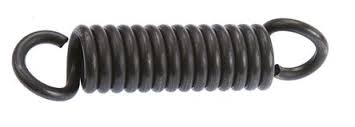
When you cut a thread you get push off on the last cut so you can go over this a few times to get the correct size. These extra cuts are called spring passes. It depends on the material as to how many you will need.
Fuck The Zeus Book
Oh and by the way don’t go looking up the thread depth in some Zeus Book or some such thing. Just multiply the pitch by .614
Lets Cut an M20 x 2.5 Thread Using The G76 Threading Cycle
Thread Depth =.614 x Pitch
.614 x 2.5 = 1.535
X Minor Diameter to cut = 20 – (1.535 x 2)
X Minor Diameter to cut = 16.93

G76 X16.93 Z-25. K1.535 D.485 F2.5
Have You Been Doing it Wrong for Years?
As I said above when I started googling G76, it’s not a pretty sight. For one there’s not that much information and not least of all some of it is wrong.
There are some absolute pricks out there claiming to know all about CNC Programming who actually know Jack Shit.
The way you use this cycle makes a big difference to the way the tool performs. The default above for the Haas G76 Threading Cycle would give you what is known as a “plunge cut”.

It is where the tool plunges into the thread and the cut gets wider and therefore is more prone to chatter as it deepens. It is going straight down the centre of the thread vee.
If you put in A60 then the cycle will flank cut.
Flank Cut?????
See below:
Don’t know what flank cutting is? Don’t worry it just means you are stupid. I won’t tell anyone, your secret is safe with me.
Help is At Hand
Ways to cut a thread
(1) Plunge: cut straight down the middle of the thread programme. A0 or simply miss it out.

(2) Flank cut: Cuts down the flank of the thread. A60 on a 60 degree thread form.

(3) Alternate flank Cut: Switched from side to side cutting down the flank of the thread. A60 P2 if you have the option.

So Which One Is Best.
The last one number (3) is the best and number (1) is worst.
Sorry to you geeks but I am going to over simplify it.
Why?
With method three you get a nice even cut with less chatter and less tool wear. It’s also kinder to your insert and better for the environment.
If you don’t believe me then talk to your tooling guy. He knows more than me anyway.
G76 has a P value of 1 to 4 (P1 P2 etc). This determines the four different methods you can use. My advice is just ignore them all and use P2. This means the tool cuts by alternating between the two sides of the thread as above. You will also need to input A60 for the angle of the tread.
G76 D.485 K1.534 X16.93 Z-25. A60 P2 F2.5
Yes and as Always There’s a Catch
You will only have alternate flank cutting on a newer machine if you have an old banger then you’re stuffed.
Not to worry just use method (2) flank cutting it’s fine.
Providing you input the insert angle A60 on a 60 degree thread form then you will get flank cutting.
Cut Depth (The Elephant in The Room)
How do you work out the number of cuts?

Be honest I know what you do, you guess. Well you are not alone actually I think loads of people do this. They guess a depth for the first cut then they just run the cycle and see how many passes they get.
Is this you?
Come on now this is not good.
For years I had seen that formula in the big yellow Fanuc Manual.
To be honest it just looked way too complicated. Then one day when my counselling sessions had finished I gingerly opened the big yellow book and decided once and for all to conquer it.
Wooppee It’s Easy
It’s just the depth of the thread divided by the square root of the number of passes. Bit of a mouthful.
So on your calculator:
(1) Press keys for depth of the thread eg 1.534

(2) Press divide key (÷)
then press the √ key

(3)Enter the number then press 10 then press =

1.534 ÷ √10 = 0.4854
This is the value to enter for D
D.485
So Easy You Can Do it Backwards
So your cycle reads
G76 D.485 K1.534 X16.93 Z-25. A60 P2 F2.5
So how many passes will I get from this?
- Enter the depth of thread (K Value).
- Press ÷
- Enter depth of first cut (D value)
- Press =
- Press the squared key (²)
The answer is:
10.01689871 that’s 10 to you.

So next time you cut a thread don’t guess the number of passes uses this formula it’s dead easy. You can also loose weight if you do this as part of a calorie controlled diet.
As I Said You Can Do it Backwards
Depth of thread divided by the depth of first pass squared.
As in the example above.
I know my depth of thread is 1.534 and I have
(1.534 / .4854)²
1.534/.4854 = 3.1602
3.1602 x 3.1602 = 9.98737 (10 to you)
Read on To See How to Get Every pass.
So you can use this formula to calculate the depth of every pass.
1.534 ÷√1 = 1.534 Cut = .000
1.534 ÷√2 = 1.084 Cut = .450
1.534 ÷√3 = 0.885 Cut = .199
1.534 ÷√4 = 0.767 Cut = .118
1.534 ÷√5 = 0.686 Cut = .081
1.534 ÷√6 = 0.626 Cut = .060
1.534 ÷√7 = 0.579 Cut = .047
1.534 ÷√8 = 0.542 Cut = .037
1.534 ÷√9 = 0.511 Cut = .031
1.534 ÷√10 = 0.485 Cut = .026
Notice how as the thread gets deeper the cuts become smaller. This is because the width of the cut gets bigger.
So making the depth less levels out the load on the tool.
Some friendly Advice
Keep it simple on your first attempt. That means missing out as much as possible. Cut your thread in fresh air (no component in the chuck). Then you can play around with all the little adjustments and watch what they do. This engineering business is so much fun. Oh and slow the speed down when you are testing it so you can see exactly what is happening. You can get ready with the E Stop.
Oh Yea Here Is Another Tip
Run your spindle really slow (like 100 rpm) that way you can stop the machine with the E Stop if it looks like it’s going to collide with a shoulder.
You only need run one pass like this. It may just scratch the first pass. Put your speed back up and you won’t see it. (It can be our secret)
Single Block, What about that?
When using G76 you can’t use feedhold. On some controls the tool will retract but please check the small print first or try it in fresh air.
Why? ……. Come on think about it.
You also can’t use spindle override. These are both blocked by the cycle to stop you messing up your precious thread.
In “Single Block” each press of the cycle start will give you one complete pass.
A Few Rules
Rules rules always stupid dumb ass rules.
- Always use G97 speed in RPM you can’t use G96.
- Don’t move the Z start position unless it’s by a multiple of the pitch.
- Don’t change the speed.
- Machine has to accelerate into the thread so start at Z5. depending on the speed and pitch this may need to be more.
- Watch out for that Z end point. That’s the one that will make it hit the chuck if you get it wrong.
- Come and train with us.
Some more useful information from Vardex.
Thanks For Reading
Don’t forget there’s loads more folks.
Contact Us
Services offered at CNC Training Centre
Classroom programmer training.
CNC Training on all controls and machines.
Mazak Training Fanuc Training
Don’t forget we offer training on all types of Mazak Machines and all Fanuc Controls 6m to 31i Oi old to young.
G71 and G70 Use to Rough and Finish Turn
Category : Fanuc Turn Haas Turn Mazak Turn
New video about the G71 roughing cycle on a Haas or a Fanuc control, also covers the G70 finishing cycle.
CNC Training Call David: 07834 858 407
30 Five Star Reviews

G71 is sometimes known as a canned cycle when in fact it is a multi repetitive cycle. The G70 cycle goes with it and can pick up the same lines to finish.
The N numbers are important as the cycle uses these as the points of reference to jump to.
G71 cycle interprets the shape between these two N numbers and then breaks up the shape for roughing.
G96, G97 and How To Calculate Surface Speeds
Category : Fanuc Turn Haas Turn Mazak Turn New Stuff
CNC Training Call David: 07834 858 407
30 Five Star Reviews
Basic Turning

Call us for CNC Training and hamsters
Basic Turning, in the early days of CNC Turning G96 was one of the things that really made a massive difference.
It meant that instead of having to turn a part at a fixed speed and feed, the part could be programmed in G96 which was a constant surface speed.
Where diameters changed, particularly when facing, it made a massive improvement to tool life and surface finish as well as speeding up the whole process.
G97 Speed In RPM
In Basic Turning when you program G97 your machine will start the chuck up at a speed in RPM. So if you program.
G97 S1500 M3
Your chuck will start revolving clockwise at 1500 rpm.
G97 for Drilling Tapping and Screwcutting
When drilling a hole you are on the centreline of the machine so you just want plain old simple RPM.
When tapping or spot drilling it’s the same.
Screw Threading (G76) can only be done in G97
G96
G96 however means meters per minute. This is a surface speed.
G96 S200 M3
Your machine would start up at a surface speed of 200 meters a minute. Now your RPM would depend on where on the diameter the tool was positioned.

If the tool was positioned at a 100mm diameter it would be as if the tool were able to run around this diameter at a speed 200 meters a minute.
It’s a bit like being on a running machine if you ran at 200 meters a minute and placed various diameters under your feet the large ones would turn at slow rpm and the small ones would turn at high rpm. (Just like the hamsters above)

That’s why on a manual lathe it is hard to face a large diameter without changing speed half way.
Neeeeeoooooooowwww
You know when you face a part on a CNC Lathe and you hear that change in pitch? It’s the spindle increasing in RPM as it gets closer to the center of the part.
When it gets to the center your spindle is flat out so the G50 becomes crucial.
The G50 restricts the speed of the machine.
G50 S2000 machine will go no higher than 2000 rpm.

Did you have a pet hamster as a child?
I know it’s a random question but bear with me there is a point to this.
Well maybe you still have a Hamster and that’s not a problem. Time you fuckin grew up but it’s not for me to judge.
Anyway I did and his name was Harold Wilson (British Prime Minister at the time).
Well I bought my hamster loads of different wheels to play on just like the one above.
My hamster suffered with depression on account of being stuck in a cage all day and not having a girlfriend oh and he had a lot of credit card debts too.
These wheels varied in diameter from about 6 inches to a massive 2 foot one. They kept him happy all night. He was so tired he slept all day.
Harold could only run so fast but I noticed when he was on the small 6 inch wheel it absolutely whizzed around. Now on the big two foot diameter one it took him ages just to get it to spin around once.
Harold Had G96
A CNC machine in G96 will give a lovely finish because the surface speed always remains the same.
So even though Harold ran at 200 metres a minute (this is fuckin lightening speed for a hamster)
The wheels ran at different RPM depending on what diameter they were.
Harold Was a Clever Bastard
Oh by the way Harold had a tail (unlike other hamsters) and a maths qualification.
He knew that if he multiplied the diameter of the wheel by .00312 it would give him the circumference of whatever wheel he was running on in meters.
200 mm wheel (.00312 x 200 = .6864)
All he now needed to do was divide this answer into the speed he was running at and he would know how many RPM his wheel was revolving at.
If he was running at 200 meters a minute not only would he be fuckin knackered but the wheel would be running at 291 rpm
200 / .6864 = 291
Basic Turning Manual Machining
Using a manual machine you have to compromise. At the outside your speed is too fast and when you get to the centre you are too slow.

On a CNC lathe we would normally program in mm per revolution as well because the speed is changing all the time so we need our feed to be locked into the speed.
With a machining centre our cutter is always revolving at the same speed so the feed can be constant in mm per minute.
Someone out there will be thinking “what happens in G96 when you get to the centre of the part”. Well the spindle will be flat out!
Could be a problem. That’s where your G50 comes in to restrict the speed. Very important! CNC Basics G50

Watch the video
See how surface speeds are translated to speeds in RPM. There are many converters online that you can use for this and I do recommend their use. It will also mean you don’t have to watch my tedious video.
When I train people at the CNC Training Centre my emphasis is on understanding not memorising. I usually start by saying “please don’t remember all the things I am telling you”.
In the early days training students in Basic Turning I remember them saying to me the next day that they had G codes floating around in their head from the lessons the day before.

What I really mean is that the most important thing is to understand what the machine can do and the concepts of programming and Basic Turning.
You could say “I know there is a G code that makes the machine run in RPM” so all you need is a list of G codes.
If you can be bothered to work through the simple maths above. It will help you to fully understand how G96 is works.
Here is a list of Basic Turning G Codes.
The ones you use every day you will remember whether you want to or not.
G96 Whoopee It’s amazing
So use G96 for everything.
Except for:
- Drilling.
- Tapping
- Threading (Screw cutting)
- Cutting the Lawn
If you feel you have been affected by any of the issues mentioned in this post please Contact me
If you liked this video, please don’t forget to subscribe to my YouTube channel by going to: CNC Training Centre
Please contact me if you require:
- CNC programming training.
- Want to learn CNC programming.
- Fanuc control training.
- Yasnac programming training.
- Any type of CNC course.
- Fanuc training courses
- CNC lathe training
- CNC Vertical Machining Centre training
Services offered at CNC Training Centre
Classroom programmer training.
CNC Training on all controls and machines.
Mazak Training Fanuc Training
Don’t forget we offer training on all types of Mazak Machines and all Fanuc Controls 6m to 31i Oi old to young.